
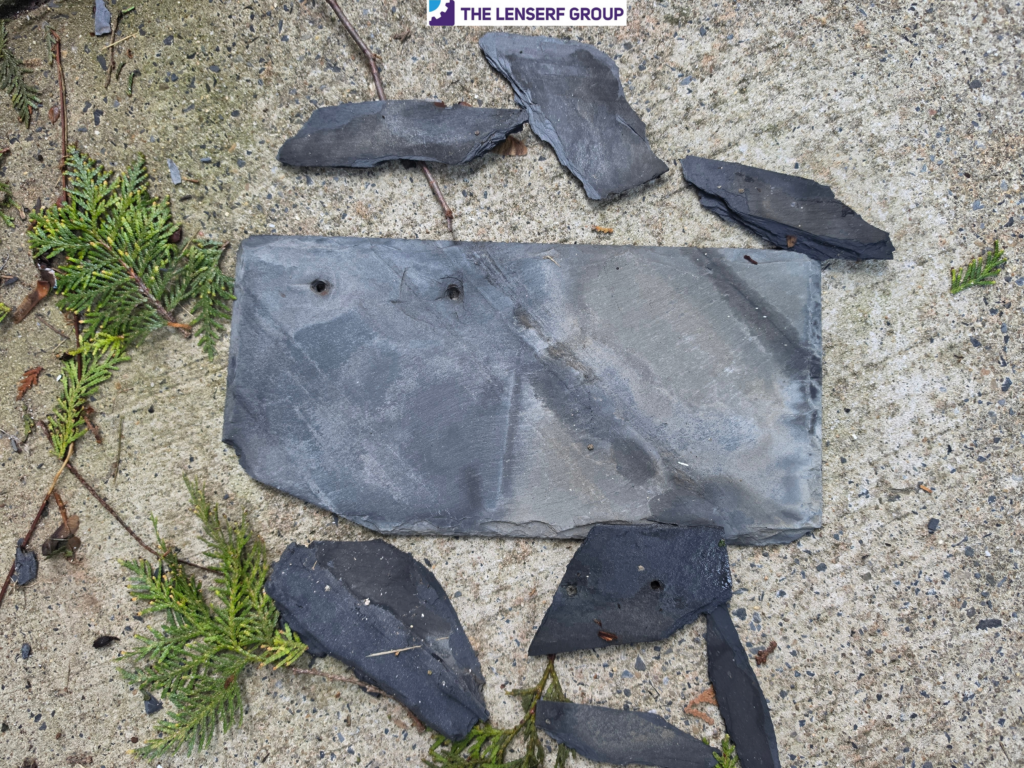
A piece of our 100-year-old slate roof came crashing down this summer.
With a mostly stone roof, we never thought this would happen. The slate had been up there for a century. Somehow, during one especially rough Philadelphia storm, some of it came crashing down. There is something very unsettling about watching what has been firmly in place for decades suddenly fall down.
Storms expose what is secure, what has shifted, and what may need attention.
The same can be true inside organizations.
New priorities take shape. Initiatives that looked perfect on paper begin involving real people, each with their own expectations, pressures, and ideas about who decides what.
That is often when the storm begins.
What Is the Storming Stage of Team Development?
The storming stage of team development is the point when team members begin testing roles, expectations, boundaries, decision-making, and ways of working together.
Bruce Tuckman gave us language for this through his stages of team development: forming, storming, norming, and performing. We all like performing. Storming? Not so much.
But storming is often where people begin figuring out how they will actually work with one another. The things that seemed clear when everyone was agreeing at kickoff suddenly are not so clear.
A team may discover that two people thought they owned the same decision. A leader may realize that a team member interpreted an expectation differently. A project may reveal that one person has been absorbing far more responsibility than anyone realized.
Storming can feel uncomfortable, but discomfort does not automatically mean something is wrong. Sometimes it means something important is finally becoming visible.
What Does Storming Look Like on a Team?
The storming stage of team development is the point when team members begin testing roles, expectations, boundaries, decision-making, and ways of working together.
Bruce Tuckman gave us language for this through his stages of team development: forming, storming, norming, and performing. We all like performing. Storming? Not so much.
But storming is often where people begin figuring out how they will actually work with one another. The things that seemed clear when everyone was agreeing at kickoff suddenly are not so clear.
A team may discover that two people thought they owned the same decision. A leader may realize that a team member interpreted an expectation differently. A project may reveal that one person has been absorbing far more responsibility than anyone realized.
Storming can feel uncomfortable, but discomfort does not automatically mean something is wrong. Sometimes it means something important is finally becoming visible.
What Does Storming Look Like on a Team?
Storming does not always look like open disagreement or conflict.
It may look like:
- confusion about who owns a decision
- frustration about changing expectations
- one person taking on too much
- unclear roles or boundaries
- repeated misunderstandings
- competing approaches to the work
- disagreement about priorities
- relationships shifting as responsibilities become clearer
At The Lenserf Group, we have experienced some of this ourselves recently.
We kicked off several new initiatives. Not everything went smoothly.
In one instance, a team member was stretched too thin. In others, relationships shifted and now have the chance to grow stronger. The dust has not fully settled yet.
That does not make the work a failure. It gives us information.
What Are the Stages of Team Development?
Tuckman’s model is commonly described through four stages of team development:
1. Forming
The team is coming together.
People are learning about the work, one another, expectations, and the environment around them. Roles may still be unclear, and people may be more cautious while they figure out how the group operates.
2. Storming
Differences begin to surface.
Team members test expectations, roles, boundaries, decision-making, and working styles. Friction can emerge as people move from the idea of working together to actually doing it.
3. Norming
The team develops clearer patterns for working together.
Expectations become more predictable. Roles are better understood. Relationships strengthen, and the team begins developing shared norms.
4. Performing
The team is able to work with greater alignment and effectiveness.
People understand how to work together, decisions move more efficiently, and less energy is spent figuring out how the team itself operates.
The stages do not always happen in a perfectly straight line.
A new team member, new leader, new project, new priority, or change in responsibilities can send a team back into storming.
That is why leaders need to recognize the stage instead of assuming something has gone wrong.
How Should Leaders Handle Team Conflict During Storming?
Leaders do not need to eliminate every point of conflict.
Their job is to help the team understand what the conflict is revealing.
Some people are especially good at easing that kind of friction.
My father is one of them.
He was recently recognized for decades of helping people navigate difficult circumstances, often in their own language. He speaks five languages.
But his real gift is knowing how to meet people where they are and get to what really matters.
Leadership in the storm often calls for that same kind of translation.
Not always literal translation.
Translation between expectations.
Between priorities.
Between perspectives.
Between what someone said and what someone actually meant.
When a team is storming, leaders can help by making the implicit explicit.
- Who owns this decision?
- What does success look like?
- What assumption are we making?
- Where is the boundary?
- What did you hear me say?
- What do you need from me?
Sometimes conflict grows because people disagree.
Other times, it grows because people are solving different versions of the same problem.
How Do Teams Move From Storming to Norming?
Teams begin moving from storming to norming when expectations become clearer, roles are better understood, decision-making becomes more predictable, and people develop greater confidence in how they will work together.
The goal is not to rush through storming.
The goal is to move through it well.
Start with three questions.
- What expectation needs to be clarified?
Misalignment often starts when everyone believes they agreed, but each person walked away with a different interpretation.
Clarify the expectation before trying to fix the behavior.
Ask what success looks like, who owns what, and how each person understands the commitment.
- What boundary needs to be set?
Storming often exposes unclear ownership or decision rights.
One person may be taking responsibility for work that belongs elsewhere. Two people may both believe they have final authority. A leader may unintentionally keep stepping into decisions the team should be making.
Clear boundaries reduce unnecessary friction.
- What conversation needs a little more translation?
Before assuming resistance, disengagement, or disagreement, make sure people actually understand one another.
Ask another question.
Restate what you heard.
Check the assumption.
Get beneath the words.
Sometimes the issue is not the decision itself.
It is what people believe the decision means.
What Tuckman’s Storming Stage Can Reveal
Tuckman’s storming stage can expose things that were easy to overlook during forming.
It can reveal:
- unclear expectations
- weak or missing boundaries
- competing assumptions
- overloaded team members
- unclear decision-making authority
- communication gaps
- knowledge concentrated in one person
- relationships that need more attention
That information can be valuable.
If leaders treat every sign of friction as something to suppress, they may miss what the friction is trying to show them.
Sometimes the storm is telling you exactly where the team needs strengthening.
Do Not Rush Straight to Performing
Leaders naturally want their teams to perform.
But performing without clarity is difficult to sustain.
If your team is in the storming stage, resist the urge to rush everyone toward performing before you understand what the storm is revealing.
Ask:
- What expectation needs to be clarified?
- What boundary needs to be set?
- What conversation needs a little more translation?
Storms create friction.
They can also clear the air.
And sometimes what becomes visible in the storm is exactly what helps a team become stronger on the other side.
Is Everything Still Routing Through You?
Storming can also reveal a broader leadership capacity issue.
If decisions consistently return to the same few people, team members wait for approval before moving, or one leader is becoming the default answer for everything, the challenge may be bigger than one difficult project.
It may be a sign that the organization needs to build more judgment, ownership, and decision-making capacity across the team.
Learn more about the Leadership Capacity Shortage.
If your team is navigating the storming stage and you want support building the clarity, capacity, and leadership your organization needs, we would love to connect.
- Email us: info@lenserfgroup.com
- Visit: lenserfgroup.com
- Schedule a conversation: calendly.com/lenserfgroup
- Subscribe to The Leaders Lens: eepurl.com/ihpO6D
- Connect on LinkedIn: The Lenserf Group
- Follow on Instagram: @exceed_your_potential
- Follow on Facebook: LenserfGroup